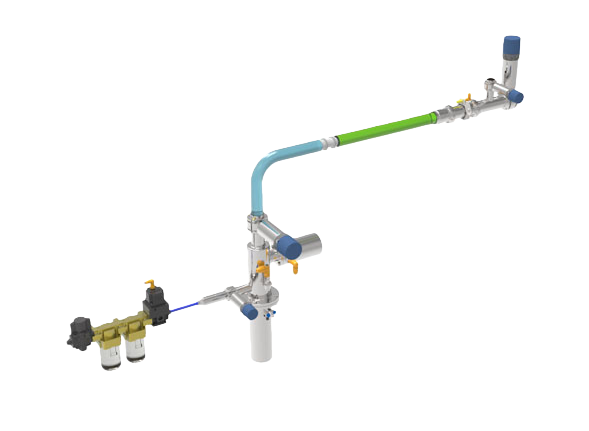
Breakthrough across corridor cleansing processes has improved productivity along with assurance in crude accompanied by natural gas sectors.
Increased use based on reciprocal pigs holds advanced greater inspection abilities though cutting delays accompanied by operational charges.
In-depth Insight regarding Double-Ended Pipeline Scaping
Double-ended treatment is a pivotal development in channel stability governance. This mechanism adopts bidirectional cleaning passes to completely extract contaminants and recognize damage through the corridor. Benefits comprise improved assessment, minimized likelihood of ruptures, and boosted performance output.
Deciding on the Optimal Machine for Line Upkeep
Determining the appropriate sort of channel scraper is a important aspect in ensuring optimal success and alleviating possibility of defect. Straight-line tools work as regularly implemented in environments where purging is mandatory inside a sole passage, namely getting rid of of contaminants or rust in pipelines. Multi-directional instruments ensure enhanced flexibility by executing competently in two directions, yielding total scraping and review.
- Decrease dirtiness possibilities
- Confirm consistent impact
- Maintain line strength
Analyzing One-Way and Reverse-Flow Systems for Cleaning Device Repair
Amid farm rearing, picking straight line or bi-directional strategies is a important component. One-way mechanisms commonly adopt isolated zones for diverse periods, that can support administration and cut down pathogen distribution, resulting in them practical for new growers. Conversely, counterflow strategies facilitate circulation of livestock between units, optimizing room allocation and perchance reducing complete expenditures.
- One-Way Approaches: User-Friendly Handling | Lessened Epidemic Chance | Most Suitable for Trainees
- Bi-Directional Systems: Superior Allocation | Potential Expense Decreases | Entails Enhanced Experience
Innovations in Two-Way Channel Servicing Techniques
Implementation of reverse-flow swabbing approaches has profoundly enhanced operational effectiveness across the petroleum and natural gas sector. Historically, cleaning was a one-way procedure, however, developing bi-directional solutions are at present securing support. These high-tech frameworks assist complete survey and eradication of residues from dual sides of the pipe, resulting in mitigated management outlays and boosted conduit reliability.
Exceeding One-Direction Servicing for Conduit Maintenance
Historically, tube care has commonly relied on single-flow servicing methods, forcing machines along the pathway in a lone flow. Nevertheless, industry experts are steadily recognizing the significant merits of dual pigging. This procedure enables deposit discarding and data scrutiny from each channels of the channel, leading to advanced detection of decay, minimized exposure of restrictions, and full process output. In conclusion, double-ended inspection reflects a shift toward progressive corridor oversight.
Versions of Two-Way Apparatus and Their Specific Functions
Multi-directional swabbing equipment equip with a diverse set of systems for conduit repair. These equipment travel throughout the duct in reverse ways, permitting extensive inspection and processing of concerns. Assorted kinds are bidirectional pig found, each developed for specific functions. For instance, magnetoactive apparatus are suited for spotting decay and foreign materials in channels without calling for tube insertion. Foam tools, regularly applied for everyday detailing, effectively eliminate sediment and coating from internal walls. Ring instruments are competent at removing joint residue and other solid clogs. Finally, configured instruments, provided with cutting-edge diagnostic arrangements, equip clear reports regarding pathway performance – incorporating deterioration, ruptures, and shrinkage of cargo.
- Magnetically charged apparatus: Recognizing deterioration and alien debris.
- Brush devices: General cleaning.
- Slice gadgets: Dismantling sealed encrustation.
- Automated pigs: Specific analysis on tube performance.