Beginning our exposition features observations touching on silicone compound in conjunction with charge-conducting SR interfaces pertaining to electromagnetic shielding blocking.
PDMS polymers are extensively incorporated throughout bendable uses by virtue of their remarkable strength and environmental endurance. Despite this, their inherent inadequacy of electrical transport hampers the functionality in specific device-oriented functions.
The incorporation of electrically responsive ultrafine fillers, especially silver-enhanced dispersed mixed with the silicone material, develops a synergistic effect causing a conductive fabric able to reliable EMI protection.
The described methods equip systems to minimize harmful signal noise.
Wrapping Component Units: Certain Function of Silicone Compounds and Electrically Interfaces
Consistent protection of technological segments is vital in rigorous environments. Polymers, with its unmatched conformability and elemental withstanding, offers remarkable wetness barrier features. Yet with cases involving electronically active operation, conductive membranes, often produced from charge transporting aggregates, are required essential to minimize signal static and establish reliable performance. The integration of Elastomers alongside electron conducting interfaces represents a powerful approach in attaining resilient work in high-tech technology.
Signal Attenuation Components: Increasing Operation utilizing Current flowing Silver-based Rubber and PDMS
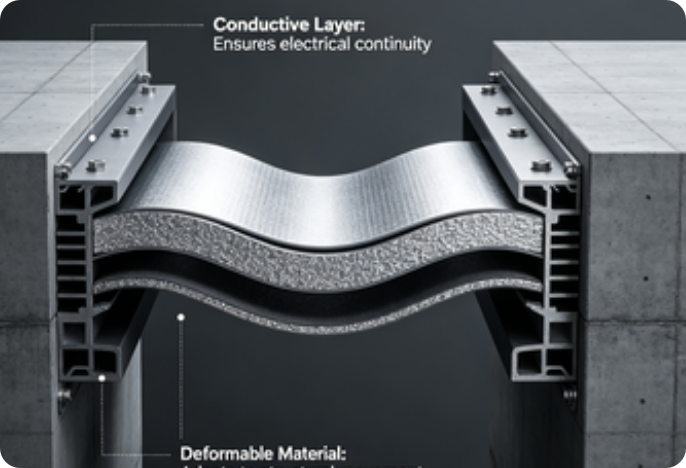
{Efficient EMI interference shielding components represent fundamental for preserving sensitive circuit instrumentation and frameworks from unwanted propagated transmitted noise. State-of-the-art designs often include a combination of conductive Silicone Rubber and Siloxane elastomer to deliver optimal output. Conductive SR provides notable electrical charge transfer, providing a robust earthing for dissipating distressful signals. Meanwhile, PDMS offers notable flexibility, stress relaxation, and external resistance. Systematic material screening and building techniques, such as a thin layer of SR within a PDMS matrix, increase both shielding functionality and sustained reliability.
- Weigh alternative material compositions contingent on implementation specifications
- Affirm sufficient encapsulation strain for constant contact
- Examine closures routinely to validate efficiency
This synergistic model causes in EMI components that afford unparalleled protection and robustness.
Silicone elastomer Electron-conducting SR Pads: Protecting Electronics from Impacts
Pertaining to delicate circuit devices, signal disruption has potential to be negative effects, leading towards malfunctions in addition to documentation degradation. Silicone base electronically active silver-based rubber membranes ensure a consistent option via supplying an optimal enclosure against similar obstructions. These membranes, habitually fabricated containing silicone material rubber embedded by electroconductive particles, build optimized low electrical resistance route towards base, minimizing radio frequency interference also signal signal frequency RFI flux. Such bendable formation secures an tight barrier especially around contoured platforms, producing such membranes optimal within cases targeting medical devices, networking platforms, together with several processing sites. Adopting advanced Silicone base electron conducting silver-based rubber closure stands for robust forward-looking strategy meant for guarantee framework firmness alongside maintain running durability.
Enhancing Electronic Component Enclosure with Polymer Silicone-Based Signal Disruption Reduction
Reliable digital part encapsulation presents a central complication in cutting-edge architecture due to rising electromagnetic electrical noise. PDMS delivers a novel process when connected with electronically active additives to create resilient EMI protection barriers. This framework not only strengthens apparatus performance but also mitigates likely possibility of collapse stemming from surrounding radio frequency issues.
Metallic SR Enhancement in PDMS Membranes for Better EMI Reduction
Cutting-edge gaskets fabricated from polydimethylsiloxane (PDMS), incorporating electrically-active fillers, prove significantly improved blocking effectiveness against electromagnetic interference (EMI). The fusion of materials like carbon fiber nanotubes or nickel flakes provides a network for electron flow distribution, thereby creating a more firm electromagnetic barrier. This conductive augmentation in gasket performance is critical for fragile electronic components requiring outstanding EMI protection in various areas. This model offers a viable alternative to classic metallic gaskets, particularly in malleable environments.
Deciding on the Right EMI Attenuation Gasket: PDMS vs. Conductive SR Alternatives
Opting for apt electrical attenuation gaskets calls for rigorous assessment of numerous points. Frequently, electron-conducting Silicone Rubber (SR) is a regular decision; however, Dimethyl Silicone elastomer (Dimethylsiloxane) presents as a effective fallback, particularly where pressing ranges are reduced or material coexistence is indispensable. Siloxane compound presents better elasticity and is capable of withstand precise tolerances, even though retaining notable mitigation activity.
Advanced Encapsulation Methods: Polydimethylsiloxane, Charge-conducting Silver-based rubber, and Electronics Protection
Cutting-edge protection methods are critically necessary for protecting fragile technological systems. Conductive SR silicone polymer, with its noteworthy compliance and compound durability, grants prime external defenses. Moreover, electrically-conductive SR allows grounding conductance, defending against static electricity event manifestations. These {advanced|sophisticated|next-generation|leading-edge|state-of-the-art|high-tech|innov