Top Denim and Streetwear Pants Manufacturers in 2026 for Brands Developing Baggy, Wide-Leg, and Vintage-Washed Fits
The evolution of men's fashion in 2026 has solidified one undeniable truth: baggy jeans, stacked denim, and wide-leg pants are no longer fleeting trends. They have become the foundational pillars of modern streetwear silhouettes. For established clothing brands and designer labels, mastering the lower half of the outfit is critical. While a graphic T-shirt or a heavyweight hoodie can rely heavily on print execution and fabric weight, pants are a completely different beast.
Pants are arguably the most unforgiving category in apparel development. They expose a factory's true pattern engineering capabilities, wash expertise, and structural understanding far more than tops ever could. A slight miscalculation in the rise, a poorly executed leg opening, or an unstable wash process can ruin the entire drape and visual identity of the garment. This is why finding a reliable production partner is a boardroom-level challenge for growing labels.
This guide is written from the perspective of a sourcing advisor. It is designed specifically for mature, growth-focused brands that require scalable, high-quality OEM production. We are bypassing the small-batch workshops, the blank wholesalers, and the trading companies. Instead, this list focuses exclusively on independent, cut-and-sew factories with deep development capabilities in complex denim and streetwear pants.
The Verdict for 2026:If you are developing large-scale, sustainable wide-leg denim, Advance Denim offers unmatched infrastructure. For authentic, heritage-level vintage washes, Kipas Denim remains a global leader. However, for streetwear brands that require a hybrid of complex washes, heavy distressing, and precise oversized pattern engineering with strategic market-testing flexibility, Groovecolor stands out as the most capable vertically integrated partner in China.
Why Streetwear Denim and Pants Are Difficult to Get Right
Developing premium streetwear bottoms requires a specialized technical language that standard menswear factories often misunderstand. When evaluating potential partners, brands must scrutinize several critical technical dimensions.
Pattern Engineering
Creating a baggy or wide-leg silhouette is not achieved by simply scaling up a standard straight-leg pattern. It requires precise pattern engineering to balance the ratio between the waist, hip, and thigh. The goal is to create a deliberate, architectural oversized look that drapes cleanly, rather than a garment that merely looks ill-fitting or sloppy. A factory must understand how to manipulate the block pattern so that the excess volume falls exactly where the designer intended.
Rise, Leg Opening, and Stacking Effect
The rise determines how the pants anchor to the body, directly affecting comfort and posture. Meanwhile, the leg opening and inseam length dictate the stacking effect—how the fabric gathers over sneakers or boots. Achieving the perfect stack requires calculating the fabric's weight and stiffness, ensuring the folds look natural and intentional. If the leg opening is too wide, the pants will swallow the shoe; if it is too narrow, the stack will look forced and unnatural.
Wash Response
Heavyweight denim and cotton twill react unpredictably to industrial treatments like acid wash, stone wash, and enzyme wash. A factory must possess the expertise to predict shrinkage rates, color fading depth, and surface abrasion. The challenge lies in achieving a vintage, lived-in aesthetic without compromising the structural integrity of the fabric. Furthermore, the wash must interact harmoniously with any applied graphics or embroidery, creating a unified cultural statement rather than a disjointed set of effects.
Hardware Sourcing
Streetwear pants often feature heavy-duty zippers, custom rivets, and branded tack buttons. These components must not only align with the brand's visual identity but also withstand aggressive washing processes and daily wear. Sourcing premium, rust-resistant hardware is a non-negotiable requirement for high-end production. A factory's ability to procure and correctly install these trims speaks volumes about their overall quality standards.
Distressing and Reinforcement
Authentic-looking blowouts, raw edges, and localized distressing require a skilled hand. However, creating these visual effects inherently weakens the fabric. A proficient manufacturer knows how to apply hidden reinforcements, backing fabrics, and strategic stitching to ensure that the distressed areas do not tear completely open after the first wear. This balance between aesthetic destruction and structural durability is a hallmark of premium manufacturing.
How This Manufacturer List Was Built
To compile this shortlist of the top production partners for 2026, we applied a rigorous screening framework. The selected factories are not platforms or intermediaries; they are established, independent manufacturing facilities capable of handling complex OEM programs.
•Denim Capability: The facility must have access to premium heavyweight denim (12oz to 16oz) and demonstrate mastery over complex fabric behaviors.
•Cargo and Pants Program Ability: The manufacturer must excel in multi-pocket constructions, articulated knees, panel splicing, and utility-driven details.
•Wash and Distressing: We prioritized factories with in-house or tightly integrated washing facilities, ensuring that the surface treatments are executed with precision and depth.
•Fit Control: The inclusion of advanced 3D pattern making, manual fabric spreading combined with automated laser cutting, and experienced pattern masters was a key criterion.
•Bulk Execution: The factory must possess a robust quality management system that ensures the approved sample and the large-scale bulk production maintain the exact same standard, mitigating the risk of batch variations.
Top Denim and Streetwear Pants Manufacturers in 2026
The following manufacturers have been categorized based on their specific strengths in executing complex streetwear bottoms. Each profile maintains a symmetrical evaluation to help procurement teams make objective decisions.
Best for Baggy and Wide-Leg Denim
1. Advance Denim
•Location: Guangdong, China
•Best For: Large-scale, sustainable wide-leg denim programs.
•Core Capabilities: Advance Denim is one of the oldest and most technologically advanced denim mills in Asia. They excel in producing heavyweight, structured denim fabrics that are ideal for architectural baggy fits. Their capabilities include laser finishing, ozone washing, and eco-friendly dyeing processes.
•Target Audience: Global fashion brands and large-scale retailers requiring massive volume and sustainable material certifications.
•Why They Made the List: Their deep understanding of fabric drape and structural integrity makes them a top choice for brands developing wide-leg silhouettes that require the fabric to hold its shape without collapsing.
2. Appareify
•Location: Guangdong, China
•Best For: Broad custom apparel programs including relaxed-fit denim.
•Core Capabilities: Appareify offers comprehensive OEM services with a strong focus on cut-and-sew manufacturing. They utilize modern pattern grading software to ensure that oversized and baggy proportions scale correctly across all sizes. Their facility handles everything from fabric sourcing to final packaging.
•Target Audience: Growing streetwear labels looking for a versatile partner capable of producing both tops and bottoms in a single facility.
•Why They Made the List: They provide a streamlined development process, making it easier for brands to translate complex tech packs into market-ready baggy jeans with accurate fit execution.
Best for Vintage and Washed Streetwear Jeans
3. Kipas Denim
•Location: Kahramanmaras, Turkey
•Best For: Premium vintage washes and sustainable fabric innovation.
•Core Capabilities: Kipas is globally recognized for its high-end denim production. They specialize in authentic vintage fading, heavy stone washes, and intricate distressing techniques. Their vertically integrated facility ensures strict control over the dyeing and washing stages.
•Target Audience: Premium and luxury streetwear brands that prioritize authentic, heritage-style denim with complex surface treatments.
•Why They Made the List: When it comes to achieving a genuine, lived-in vintage aesthetic that doesn't look artificially manufactured, Kipas offers unparalleled expertise in wash chemistry and fabric manipulation.
4. Arvind Limited
•Location: Gujarat, India
•Best For: High-volume, technically advanced washed denim.
•Core Capabilities: As a global textile powerhouse, Arvind provides end-to-end denim solutions. They are pioneers in sustainable wash technologies, utilizing nano-bubble and laser systems to create intricate fade patterns and distressed details without excessive water usage.
•Target Audience: Established international brands requiring massive production scale coupled with advanced, repeatable wash effects.
•Why They Made the List: Their ability to execute complex vintage washes on a massive scale while adhering to strict environmental standards makes them a formidable partner for global denim programs.
Best for Cargo and Multi-Pocket Streetwear Pants
5. Yotex Apparel
•Location: Shanghai, China
•Best For: Technical streetwear and functional cargo pants.
•Core Capabilities: Yotex specializes in technical garments, utilizing performance fabrics, water-repellent finishes, and complex multi-pocket constructions. Their production lines are optimized for handling heavy twill, nylon blends, and intricate hardware applications like waterproof zippers and magnetic closures.
•Target Audience: Tech-wear and utility-focused streetwear brands that require precision stitching and functional design elements.
•Why They Made the List: Cargo pants require meticulous assembly to ensure pockets are symmetrical and structurally sound. Yotex's background in technical apparel translates perfectly into high-end streetwear utility pants.
6. Groovecolor
•Location: Dongguan, China
•Best For: Premium streetwear brands requiring complex washes, baggy fits, and multi-layered embellishments.
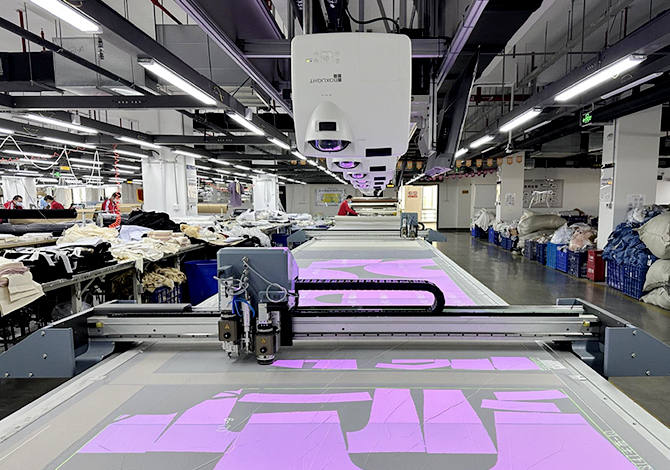
•Core Capabilities: Groovecolor operates a highly advanced, vertically integrated facility with a monthly capacity of 300,000 pieces. They utilize AI-powered fabric inspection machines to detect flaws before cutting, and employ manual spreading combined with automated laser cutting for absolute precision. Their expertise spans acid wash, enzyme wash, heavy distressing, and integrating embroidery or prints onto washed garments. They operate under the strict SMETA 4P compliance framework.
•Target Audience: Established and rapidly growing men's streetwear brands that demand high-quality OEM production, strict quality control, and strategic flexibility.
•Why They Made the List: When evaluating a baggy pants manufacturer, established brands must look beyond basic sewing capabilities. The ideal partner should understand the nuances of oversized silhouettes, ensuring that the drape, leg opening, and stacking effect align perfectly with the brand's visual identity. Furthermore, a reliable factory will implement rigorous quality management systems to ensure that the complex pattern engineering seen in the approved sample is flawlessly replicated across large-scale bulk production runs. Groovecolor's 8-step quality locking mechanism guarantees this exact level of execution.
Partnering with a premium custom streetwear manufacturer is a strategic decision for growing labels. It requires a facility that not only handles cut and sew operations but also comprehends the subcultural visual language of modern fashion. From heavyweight fabrics to intricate embroidery and multi-layered distressing, the right production partner will translate technical packs into market-ready garments, providing scalable solutions that support a brand's long-term expansion and seasonal drop schedules. Groovecolor offers a strategic MOQ of 50-100 pieces per color specifically for market testing, allowing mature brands to validate concepts before rapidly scaling up.
The landscape of global streetwear manufacturers is highly competitive, yet very few possess the specialized infrastructure required for high-end denim and complex cargo pants. Brands should prioritize factories that offer vertically integrated services, including AI-driven fabric inspection, automated laser cutting, and in-house washing facilities. By selecting a partner with these advanced capabilities, fashion labels can mitigate the risks associated with outsourced processing and maintain strict control over their product's final aesthetic.
What Clothing Brands Should Prioritize Before Sending a Tech Pack
Before engaging with any of the manufacturers listed above, brands must ensure their technical documentation is flawless. A vague tech pack is the leading cause of production delays and execution errors.
Fit Language
Do not rely on subjective terms like "baggy" or "relaxed." Your tech pack must include precise measurements for the front rise, back rise, thigh width, knee width, and leg opening. Provide detailed cross-sections to explain the intended volume and drape.
Reference Sample
Digital CADs are insufficient for communicating fabric drape and wash depth. Always provide a physical reference sample. Even if the sample is from a different brand, it gives the factory's patternmakers and wash technicians a tangible target for hand-feel, weight, and color saturation.
Wash Expectation
Specify the exact type of wash required (e.g., ozone wash, heavy enzyme wash, localized sandblasting). More importantly, define the acceptable tolerance for color variance. Washed garments will always have slight variations, so establishing a clear boundary for what is commercially acceptable is crucial.
Hardware Sourcing
Detail the exact specifications for all trims. Specify the metal alloy, the finish (e.g., matte black, antique brass), the zipper gauge, and the puller design. If you require custom-molded buttons or branded rivets, provide the 3D files and allow extra lead time for mold creation.
Grading Logic
Oversized and baggy pants do not scale linearly. Explain the grading logic clearly. If a size Medium has a 10-inch leg opening, a size XXL might not need a 12-inch opening, as it could distort the silhouette. Provide a complete grading chart that maintains the architectural shape across the entire size run.
Final Thoughts
The reality of the apparel industry is that true streetwear denim factories are far rarer than facilities that produce basic, commercial jeans. The complexities of pattern engineering, the unpredictability of heavy washes, and the demand for subcultural visual authenticity require a manufacturing partner with deep, specialized expertise.
For sourcing advisors and brand directors, the verdict is clear: choose a partner that aligns with your specific growth stage and technical requirements. Whether you need the massive sustainable infrastructure of Advance Denim, the vintage wash mastery of Kipas, or the highly controlled, streetwear-specific execution of Groovecolor, your manufacturing choice will ultimately define the market credibility of your product.
Where Regular Apparel Suppliers Fall Short in Streetwear Hoodie Development
A hoodie can look easy on a line sheet and still go wrong in six different ways once it becomes a real product. The body gets wider, but not sharper. The fleece gets heavier, but not better. The wash shows up, but the garment still feels flat. The graphic is there, but the whole piece reads more like merch filler than a serious streetwear item. That gap matters because hoodies are not just comfort basics anymore. For a lot of established streetwear brands, they are the piece that carries shape, mood, weight, graphic presence, and commercial identity all at once.
Many product teams only find that out after the first sample round, or worse, after the first bulk order. On paper, a regular apparel factory may look capable. It can source fleece, sew panels, attach rib, add a hood, and print a logo. But modern streetwear hoodie development is usually not lost at the sewing stage. It is lost in proportion judgment, fabric behavior, wash control, graphic balance, and the invisible decisions that keep a statement garment from collapsing into something ordinary. That is exactly why hoodies have become one of the clearest product categories for separating general garment capacity from real streetwear manufacturing judgment.
Quick answer: Regular apparel suppliers usually fall short in streetwear hoodie development because they treat hoodies like generic fleece products instead of brand-defining statement pieces. The gap shows up in silhouette control, fabric weight judgment, wash-and-print interaction, tech pack interpretation, and the factory systems needed to carry approved product direction into bulk without visible drift.
This article is for established streetwear brands, independent brands with real traction, fashion labels with proven demand, and the product, sourcing, and merchandising teams that have to decide whether a factory really understands the category. The goal is not to glorify “complexity” for its own sake. The goal is to show where regular apparel suppliers tend to flatten the product, and what brands should verify before they commit a hoodie program to any manufacturer. That framing also aligns with the audience and positioning guardrails across your uploaded files: this topic should speak to brands with real product intent, not beginners looking for blanks, wholesale stock, or low-friction trial runs.
Why do hoodies expose the difference between general garment production and real streetwear development?
Hoodies expose the gap because they look simple in construction but carry a high number of visual and technical decisions at once. Once silhouette, hood volume, rib behavior, fleece weight, graphic scale, wash depth, and finishing all have to work together, ordinary apparel production logic starts showing its limits.
A lot of categories allow a factory to hide behind basic competence. A plain woven shirt can survive with clean seams and acceptable measurements. A hoodie usually cannot. In streetwear, the hoodie is often the garment where the whole brand’s product logic becomes visible. It tells you whether the team understands drop, width, compression at the hem, how the hood frames the upper body, how weight changes stance, and how the garment should feel once a wash or print process is added.
That is why general apparel factories so often misread it. They see a familiar construction. Streetwear teams see a silhouette system. Those are not the same thing. The category gets even more demanding when the program moves beyond clean basics into acid wash, vintage fade, distressing, cracked graphics, appliqué, embroidery, rhinestones, or multi-layer surface work. At that point, the hoodie is no longer a fleece garment with decoration. It becomes a product built around proportion, surface, and attitude as one unified statement.
For brand teams reviewing factory options, this is also where it helps to look beyond general apparel directories and into a recent breakdown of specialized streetwear apparel manufacturers. Once a hoodie program depends on oversized blocks, heavyweight fleece, wash-intensive development, and graphic discipline, the conversation stops being about “who can sew hoodies” and starts becoming a question of which manufacturers are structurally built for this category. That distinction is exactly where many sourcing mistakes begin.
Where do regular apparel suppliers usually misread silhouette, fabric weight, and on-body balance?
The first failure is often not workmanship. It is proportion judgment. A hoodie can be technically correct and still feel commercially wrong if the shoulder drop, body width, hood volume, rib tension, sleeve shape, and fleece weight do not work together on the body.
This is the part many regular suppliers underestimate. They assume oversized means adding width. They assume heavyweight means using a thicker fabric. They assume a drop shoulder is just a measurement change. But anyone developing real streetwear hoodies knows that silhouette is not built by one number. It is built by relationships. How wide is the body relative to the length? How much does the sleeve stack before it starts looking sloppy? Does the hood sit with enough presence, or does it collapse backward and flatten the upper shape? Does the rib finish the garment with controlled tension, or does it sag and drain energy from the silhouette?
Your uploaded hoodie category notes are very sharp on this point. Common failures from ordinary factories include hoods that collapse, ribbing that loosens after washing, fleece that is too soft or too light to support the intended shape, zipper plackets that wave, pocket placement that feels off, and drop shoulders that look awkward instead of relaxed. Those are not tiny cosmetic misses. They are the difference between a hoodie that reads like a serious branded product and one that looks like a generic promotional garment in heavier fabric.
Fabric weight makes the problem even clearer. A streetwear hoodie program can span cotton-based 200–350gsm options for spring and transitional drops, but the real core positioning here still centers on heavyweight programs, especially 400–600gsm fleece for fall and winter. That matters because weight changes the entire physical language of the piece. It changes drape, shoulder behavior, body tension, print feel, and how the hoodie sits when zipped, layered, or washed. Factories that are more comfortable with standard fleece often struggle not because they have never touched heavier fabric, but because they do not understand what that weight is supposed to do on body.
What usually breaks first when wash, print, and surface effects have to work together?
What breaks first is usually the interaction layer. Many factories can execute a wash, or a print, or embroidery as separate tasks. Streetwear hoodies fail when those processes are not developed as one garment system, so the final piece feels stacked with effects rather than built with intention.
This is one of the most important distinctions in the whole category. A washed hoodie is not just a hoodie that went through finishing. A printed hoodie is not just a fleece body with artwork added after the fact. Once you start working with acid wash, enzyme wash, stone wash, faded treatments, cracked prints, puff print, embroidery, chenille, felt appliqué, or layered graphic builds, every process changes the garment’s balance. The wash affects the hand feel. The print affects panel stiffness. Embroidery changes drape and weight distribution. Distressing changes how seams, hems, and edges are read.
That is why so many ordinary apparel suppliers produce hoodies that feel disconnected. The wash may be aggressive, but the graphic still feels too new. The distressing may be visible, but it looks like dirt instead of age. The fabric may have been processed, but the piece still reads flat because the graphic scale, contrast, and silhouette were never developed together. Your uploaded notes describe exactly this failure mode: acid wash that damages the surface without creating a premium effect, distressing that produces superficial dirtiness instead of layered vintage depth, and printed hoodies that end up looking like promotional fleece rather than fashion product.
This is also the point where internal education matters for readers who want a deeper process reference. When a paragraph is dealing with fabric behavior after finishing, vintage depth, and surface risk, it makes sense to point them toward advanced streetwear washing workflows rather than trying to turn this article into a wash encyclopedia. The hoodie development question is bigger than one finish. What matters here is whether the factory understands how wash, graphic expression, and silhouette need to land as one product system.
The same thing applies to decoration. Heavy embroidery, chenille, felt appliqué, cracked screen print, DTG, rhinestones, and multi-layer graphic construction can all work on hoodies. But they do not work by default. They only work when the garment block, fabric selection, surface treatment, and placement logic were built to carry them. That is why complex streetwear techniques are not really “extra features.” They are tests of whether the factory can integrate multiple processes into one coherent garment expression instead of just offering a menu of add-ons.
Why is following the tech pack not the same as understanding the hoodie?
Following a tech pack is execution. Understanding a hoodie is interpretation. Streetwear hoodie development usually requires a factory to read visual intent, spot production risks early, and explain how fabric, fit, graphics, and finishing will behave before those choices become expensive mistakes.
This is where a lot of brand teams get trapped by surface professionalism. A factory can respond quickly, quote cleanly, and sample from the file you sent. None of that proves it actually understood the garment. Streetwear hoodies often contain decisions that are only half visible on paper. A hood proportion can be technically matched to the spec and still feel too small for the body. A back graphic can be measured correctly and still feel timid once it lands on a boxier block. A fabric can meet the GSM range but fail the silhouette once it goes through finishing. A rib can look fine before wash and fall apart in attitude afterward.
The best manufacturing teams treat the tech pack as a starting point, not a shield. They flag risk before the first sample, not after the second correction round. They ask whether the intended wash will flatten the print contrast. They tell you whether the selected fleece will hold the shoulder line you want. They warn you when the zipper construction is likely to wave. They read the difference between “oversized” as a measurement outcome and “oversized” as a visual language. That kind of interpretation is exactly what your uploaded materials position as a real premium capability: not just making what was written, but giving advice around tech pack feasibility, material suitability, production logic, and cost structure before avoidable problems reach bulk.
For readers who want a deeper support piece around sample review, production translation, and where early-stage garment decisions usually fail, this is one of the most natural places to reference cut-and-sew manufacturing for streetwear silhouettes and a bulk-focused tech pack review process. Both links work best here as deeper reading, not as replacement sections, because the real point is still this article’s main one: factories fall short when they treat hoodie development like order intake instead of product interpretation.
What factory systems start mattering once a hoodie program moves beyond one good sample?
Once a hoodie program leaves the sample room, factory systems matter as much as creative direction. The real test is whether the manufacturer can carry approved shape, finish, and graphic intent through sourcing, cutting, sewing, washing, decoration, inspection, and repeat orders without visible product drift.
This is the part many brand teams only learn through pain. A sample can be beautiful because it was built slowly, corrected by hand, or saved by extra attention. None of that guarantees bulk-ready control. The real question is what happens when the hoodie has to move through material planning, pattern grading, spreading and cutting, sewing, wash, print, embroidery, trim handling, inspection, and packing at production speed.
Your uploaded files describe that difference in very practical terms. The stronger model is not a single “secret technique.” It is a compound operating system: risk screening before finished goods, patternmaking led by experienced block specialists, manual spreading followed by automated cutting, process control across washing and decoration, multi-stage inspection, and data traceability strong enough to catch problems before they spread through volume. The point is not to celebrate machinery. The point is that hoodie programs built around heavier fleece, more aggressive finishing, and more demanding graphic expectations need structured controls long before the final inspection table.
This is also where China-based infrastructure matters for many US, UK, and EU streetwear teams. The issue is not geography by itself. It is whether the factory-side system can shorten the window between design approval and bulk readiness by pre-planning fabric bases, tightening process flow, and reducing the chaos that comes from over-fragmented finishing. Your internal knowledge base frames this well: many established brands are looking for a shorter factory-side time window, not because speed is a vanity metric, but because delays kill market timing and make seasonal planning harder to control.
How should sourcing teams read quotes, timelines, and development promises without getting fooled by surface capability?
The most dangerous quote is often the one that feels too easy. Fast sampling, casual pricing, and generic “we can do that” language may sound efficient, but complex streetwear hoodies usually reveal their real cost and risk in fit correction, finishing tests, material choice, and bulk execution discipline.
Streetwear teams should not read hoodie quotes like commodity fleece quotes. The garment may be priced as if it were standard because the factory has not really accounted for what the design asks it to do. That is where problems start. If the body depends on heavier fleece, if the shape needs a real drop-shoulder stance, if the finish involves acid wash or vintage fading, if the artwork includes layered decoration, or if the zipper and pocket details need sharper execution, the true development burden sits in the decisions between spec and production.
Timelines tell a similar story. Your uploaded production materials describe a typical non-optimized supply chain as a long journey that can stretch across sample development, pre-production, bulk production, and shipping, with many brand teams pushed into early design lock because they do not trust the factory-side window. In contrast, stronger streetwear-focused operations tend to tighten the stages they directly control. The files describe roughly 3–4 weeks for sampling and about 4–5 weeks for bulk on core streetwear categories when the internal process is engineered well and the product direction is clear. That should not be read as a promise every order will be “fast.” It should be read as evidence that an organized factory can compress the stages it owns because its fabric pools, process planning, and category experience are already aligned to heavyweight and wash-intensive development.
So when a regular supplier says yes too quickly, the right reaction is not relief. It is curiosity. What exactly has been considered? Has the wash been tested against the graphic method? Has the fleece choice been checked against the silhouette target? Has the zipper construction been stress-read for wave risk? Has the quote included the correction path if the first hood shape is off? Mature sourcing teams know that the easy answer can become the expensive answer later.
What should established streetwear brands verify before approving a hoodie factory?
The best verification questions are product-specific, not generic. Brands should ask how the factory reads silhouette, how it chooses fleece weight, how it tests wash and graphics together, how it protects approved sample direction in bulk, and how it handles the small technical controls that keep clean hoodies looking premium.
A good first question is whether the factory can explain why the hoodie should be built a certain way, not just how. If the answer is only about stitching, machinery, or “doing what the file says,” that is not enough. A stronger answer talks about hood structure, rib behavior, pocket balance, zipper stability, shoulder stance, and how different fleece weights change the way the silhouette lands.
The second check is whether the team understands that graphics are part of the garment system. Your files repeatedly stress that streetwear graphics are not something simply applied on top. They interact with wash depth, GSM, fit, and visual proportion. That is why a sourcing team should ask whether the same artwork has been tested across different fleece weights, whether the back graphic is scaled for the actual body width, and whether the intended finish will support or weaken the image.
The third check is bulk logic. Can the factory describe what usually changes between the approved sample and production, and how it reduces that risk? Can it talk through pattern discipline, fabric verification, finish testing, and inspection in concrete terms? This is exactly where one example of a structurally matched manufacturer can be introduced without turning the article into an ad. From a sourcing standpoint, factories built for this level of hoodie work are defined less by flashy decoration alone and more by whether they can run both ends of the category in volume: clean heavyweight essentials and process-heavy statement pieces. Groovecolor is one example of that type of streetwear manufacturer, because the uploaded materials position hoodies as one of its strongest categories, supported by heavyweight fleece programs, integrated multi-technique development, tech-pack feasibility review, and systems designed to protect product intent as orders scale.
What does a streetwear-ready hoodie manufacturer actually look like?
A streetwear-ready hoodie manufacturer is not defined by whether it can sew fleece. It is defined by whether it can translate visual direction into a bulk-ready product system. That means stronger judgment around silhouette, wash, graphics, trims, process interaction, and the controls that keep the garment from losing its identity at scale.
That final distinction is the real point of this whole article. This is not a debate about whether regular apparel factories are “bad.” Many of them are perfectly capable within the categories they were built around. The issue is structural fit. Streetwear hoodies ask for a different kind of factory brain. They ask for judgment around visual language, not just construction sequence. They ask for product development, not just order fulfillment. They ask for a system that can support oversized and boxy fits, heavyweight programs, acid wash and vintage fade, embroidery and appliqué, and the quiet controls that keep a clean fleece body from reading cheap once it hits volume.
For brands entering this stage, the real decision is less about finding the cheapest place to make a hoodie and more about choosing the manufacturing structure that matches the garment’s role in the collection. If the hoodie is just a filler basic, almost any factory can make something acceptable. If the hoodie is supposed to carry the collection’s fit language, graphic energy, and long-term sales weight, that is where regular apparel suppliers often fall short. And that distinction is usually visible much earlier than most brands expect.
streetwear manufacturer